Best Face Yoga Apps Compared: The Top Apps to Try for Healthier, Younger-Looking Skin in 2026
Face yoga has become one of the most popular beauty trends around the world. Instead of spending money on expensive skincare treatments or cosmetic procedures, many people are choosing natural ways to care for their skin. One of those methods is face yoga.
Face yoga involves simple facial exercises that help improve muscle movement, reduce facial tension, and encourage better blood circulation. While it isn’t a replacement for medical or cosmetic treatments, many people enjoy it as part of their daily self-care routine.
The easiest way to learn face yoga is through a mobile app. These apps guide you through short daily sessions, remind you to stay consistent, and help you build a healthy habit.
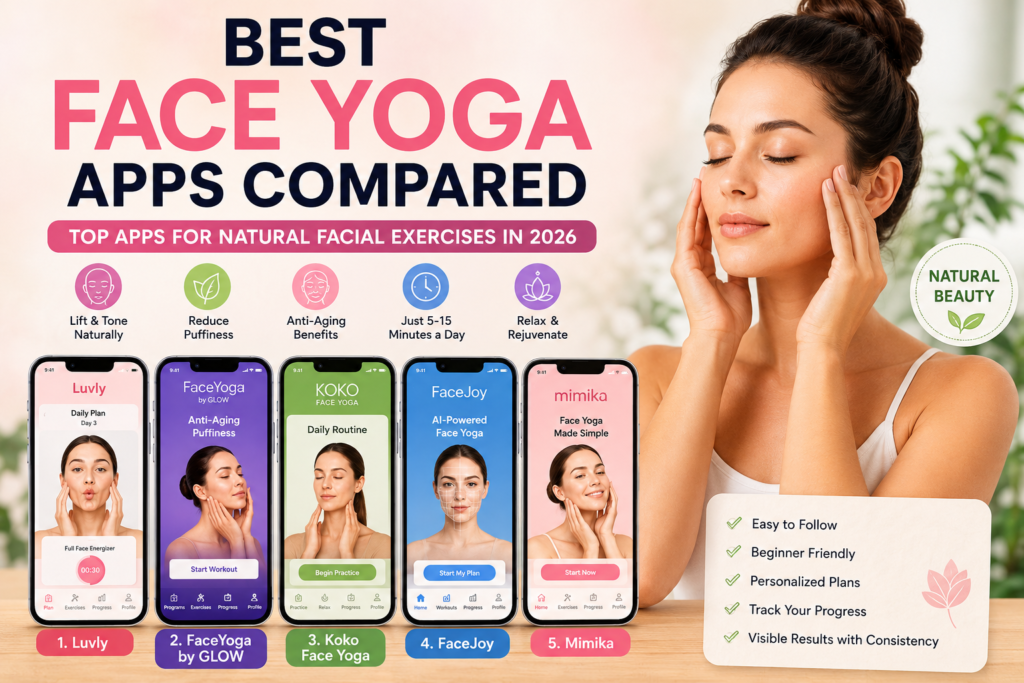
With so many options available, choosing the right app can be confusing. In this guide, we’ll look at some of the best face yoga apps in 2026, their features, advantages, and who they’re best suited for.
Why Are Face Yoga Apps So Popular?
Busy schedules make it difficult to attend in-person classes. Face yoga apps let you practice whenever it suits you—before work, during a lunch break, or before going to bed.
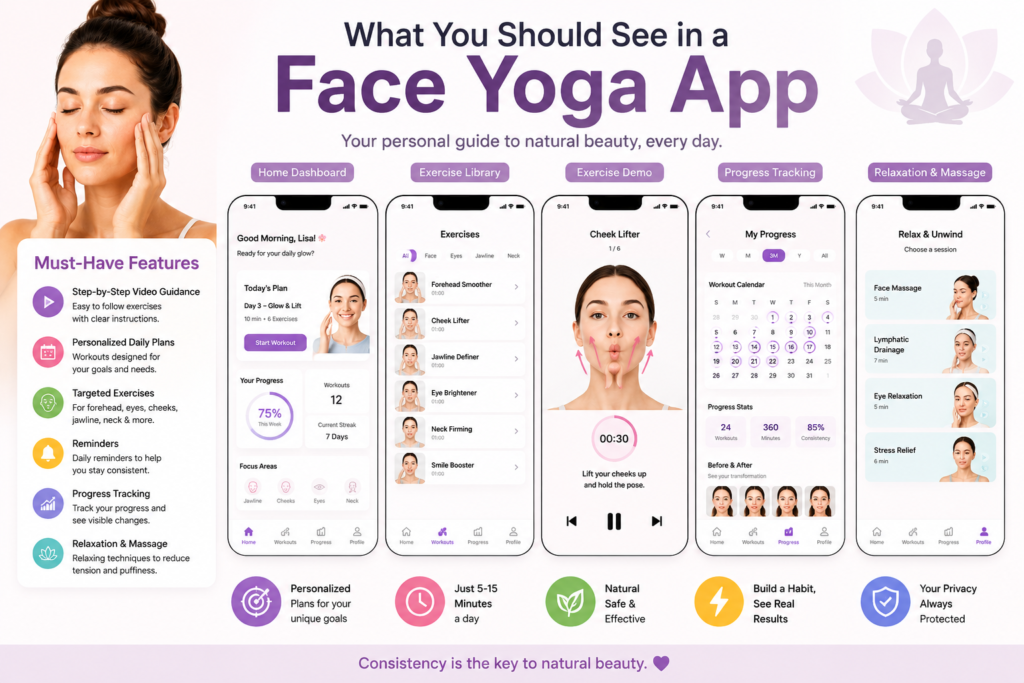
Most apps include:
- Step-by-step video tutorials
- Daily workout plans
- Exercises for different parts of the face
- Progress tracking
- Daily reminders
- Relaxation and facial massage techniques
- Personalized routines based on your goals
Many sessions take only 5 to 15 minutes, making them easy to fit into your day.
What Should You Look for in a Face Yoga App?
Not every app offers the same experience. Before downloading one, consider these features:
Easy-to-Follow Instructions
Clear videos and simple guidance are especially helpful if you’re new to face yoga.
Daily Plans
A structured plan helps you stay motivated and develop a routine.
Different Exercise Categories
Look for exercises that target the forehead, cheeks, jawline, neck, eyes, and smile lines.
Reminders
Daily notifications can help you stay consistent, which is important for any exercise routine.
Progress Tracking
Some apps allow you to track your workouts or take progress photos to stay motivated.
1. Luvly
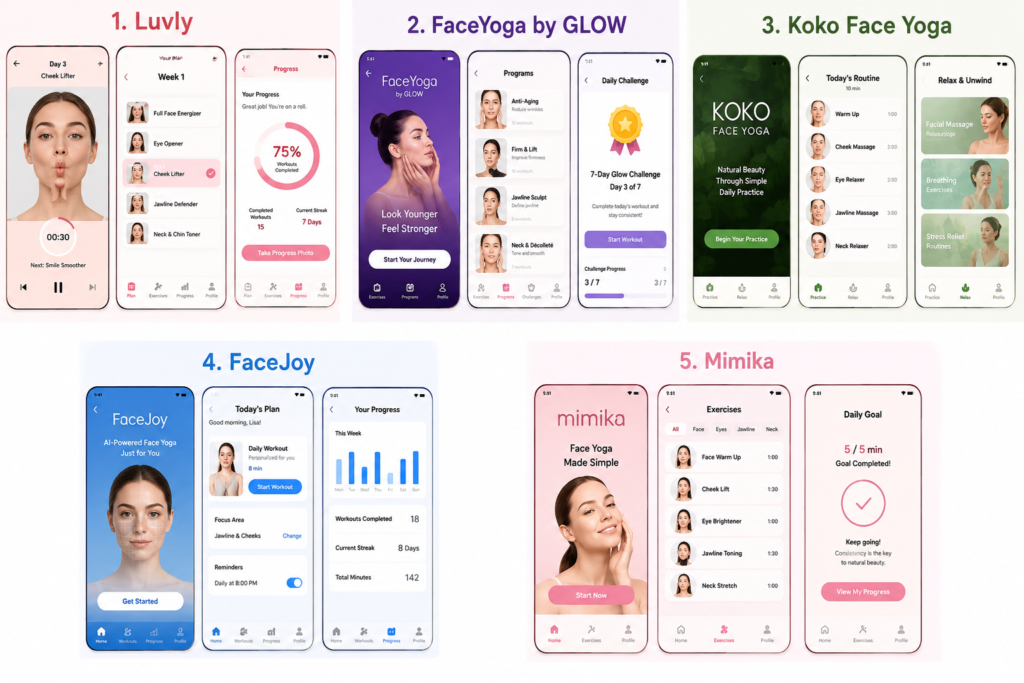
Luvly is one of the best-known face yoga apps and is often recommended for beginners.
The app offers personalized workout plans based on your beauty goals. Whether you want to reduce puffiness, define your jawline, or simply relax your facial muscles, Luvly creates a routine that fits your needs.
One of its biggest strengths is its high-quality video demonstrations. Each exercise is explained clearly, making it easy to follow even if you’ve never tried face yoga before.
What You’ll Like
- Beginner-friendly
- Daily personalized workouts
- Facial massage routines
- Skincare tips
- Progress reminders
- Modern, easy-to-use interface
Things to Keep in Mind
Most advanced features require a paid subscription.
2. FaceYoga by GLOW
FaceYoga by GLOW focuses mainly on anti-aging exercises.
The app includes workouts for forehead lines, smile lines, crow’s feet, jawline definition, neck tightening, and facial relaxation.
It also offers short daily challenges that make it easier to stay motivated.
Many users like the clean layout and simple instructions.
Best For
People who want exercises focused on fine lines and facial firmness.
Pros
- Easy navigation
- Targeted facial exercises
- Daily challenges
- Beginner-friendly lessons
Cons
Premium membership is needed to unlock all features.
3. Koko Face Yoga
If you’re looking for a calmer and more relaxing experience, Koko Face Yoga is worth considering.
Instead of focusing only on appearance, the app combines facial exercises with massage techniques and relaxation routines.
Many people use it as part of their evening self-care routine.
Highlights
- Gentle facial massage
- Relaxation exercises
- Short sessions
- Suitable for beginners
- Simple interface
Although the exercise library is smaller than some competitors, it’s still a good option for daily practice.
4. FaceJoy
FaceJoy is different because it uses artificial intelligence to recommend exercises.
The app asks about your goals before suggesting personalized workout plans.
It also includes reminders, progress tracking, and quick daily routines.
The design is modern and easy to use, making it appealing to younger users.
Advantages
- AI-powered recommendations
- Personalized routines
- Daily reminders
- Progress tracking
Disadvantages
Many premium features require a subscription.
5. Mimika
Mimika is ideal for people who want something simple.
The app focuses on quick facial workouts that can be completed in just a few minutes.
Its clean design makes it easy to follow without feeling overwhelmed.
If you’re completely new to face yoga, Mimika is a comfortable place to begin.
Are Face Yoga Apps Really Effective?
This is one of the most common questions people ask.
Face yoga apps can help you create a regular routine and teach you the correct way to perform facial exercises. Some users say they notice benefits such as:
- Less facial puffiness
- Better relaxation
- Increased awareness of facial muscles
- A fresher appearance
- Reduced facial tension
However, it’s important to understand that results vary from person to person.
Current scientific research on face yoga is still limited. While some small studies suggest facial exercises may improve muscle fullness and facial appearance over time, more high-quality research is needed to confirm how effective they are for reducing signs of aging.
Think of face yoga as one part of a healthy lifestyle rather than a quick fix.
Tips for Getting Better Results
If you decide to use a face yoga app, these tips can help you make the most of it.
Practice Every Day
Even 10 minutes a day is better than one long session once a week.
Be Gentle
Avoid stretching or pulling your skin too hard. Face yoga should feel controlled and comfortable.
Stay Hydrated
Drinking enough water supports overall skin health.
Follow a Good Skincare Routine
Cleanse, moisturize, and protect your skin with sunscreen during the day.
Get Enough Sleep
Quality sleep plays an important role in healthy-looking skin.
Eat a Balanced Diet
Foods rich in vitamins, healthy fats, and antioxidants support your skin from the inside.
Take Progress Photos
Instead of checking the mirror every day, take photos every few weeks. This makes it easier to notice gradual changes.
Can Face Yoga Replace Botox?
No.
Face yoga and Botox are completely different.
Botox is a cosmetic medical treatment that temporarily relaxes certain muscles to reduce the appearance of wrinkles. Face yoga involves voluntary exercises and massage techniques designed to improve muscle control and relaxation.
If you’re looking for dramatic or immediate wrinkle reduction, face yoga is unlikely to produce results similar to Botox. However, many people enjoy face yoga because it is natural, non-invasive, and easy to do at home.
Who Should Use a Face Yoga App?
Face yoga apps are suitable for:
- Beginners interested in natural beauty
- People looking to build a daily self-care routine
- Anyone wanting short wellness sessions
- People who enjoy guided video exercises
- Users looking to relax facial muscles after long hours of screen time
If you have a recent facial injury, have recently undergone facial surgery, or have a medical condition affecting your face or jaw, it’s best to speak with a healthcare professional before starting facial exercises.
Which Face Yoga App Is Best?
The right app depends on your goals.
If you’re just starting, Luvly is an excellent all-round choice thanks to its guided routines and simple lessons.
If your main focus is anti-aging exercises, FaceYoga by GLOW is a strong option.
For relaxation and facial massage, Koko Face Yoga stands out.
If you enjoy personalized technology, FaceJoy offers AI-powered recommendations.
And if you prefer short, simple routines, Mimika is a great place to begin.
The most important factor isn’t choosing the “perfect” app—it’s choosing one you’ll use consistently. A few minutes of practice every day can help make face yoga a regular part of your wellness routine.
Frequently Asked Questions
Which is the best free face yoga app?
Many apps offer free beginner exercises, but most require a premium subscription to unlock all workouts. Try the free version first before deciding whether to upgrade.
How long should I practice face yoga each day?
Most experts recommend around 5 to 15 minutes a day. Consistency is generally more important than long sessions.
Can face yoga reduce wrinkles?
Some people notice improvements in facial tone and relaxation with regular practice. However, evidence that face yoga significantly reduces wrinkles is still limited, and results vary.
Is face yoga safe?
For most healthy adults, gentle face yoga is considered low risk. Avoid forcing movements or stretching the skin aggressively, and consult a healthcare professional if you have a medical condition or recent facial surgery.
How long does it take to notice changes?
Some users report reduced puffiness and a more relaxed appearance within a few weeks. More noticeable changes, if they occur, usually require consistent practice over several months.
Final Thoughts
Face yoga apps make it easy to build a simple self-care habit without leaving your home. Whether your goal is relaxation, better facial awareness, or a natural addition to your skincare routine, these apps provide convenient guidance.
Remember that healthy skin depends on many factors, including sleep, nutrition, hydration, sun protection, stress management, and skincare. Face yoga can be a helpful part of that routine, but it works best alongside these healthy habits rather than as a standalone solution.