
Neuro Yoga: What It Is, How It Works, and Why Everyone Is Talking About It
What Is Neuro Yoga?
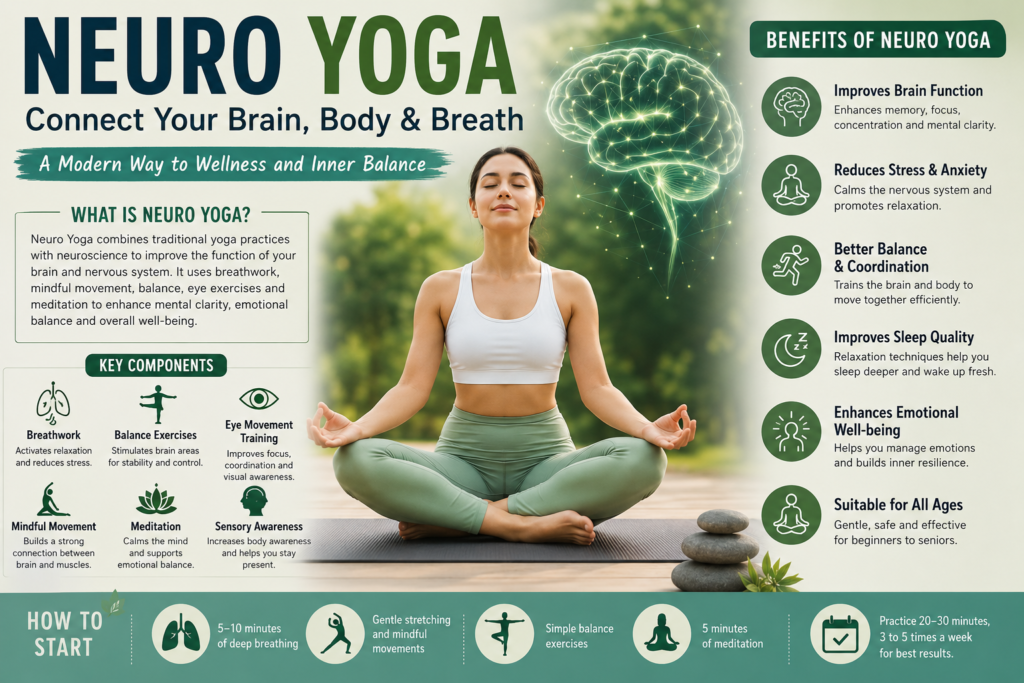
Neuro Yoga is a modern approach to yoga that combines traditional yoga practices with neuroscience. Instead of focusing only on flexibility or physical fitness, Neuro Yoga aims to improve the way your brain and nervous system function.
The practice includes breathing exercises, mindful movement, balance training, eye exercises, meditation, and relaxation techniques that help regulate the nervous system. The goal is to create better communication between the brain and body.
Unlike regular yoga, Neuro Yoga pays special attention to how the brain responds to movement, stress, emotions, and breathing.
How Does Neuro Yoga Work?
Our brain constantly receives information from our eyes, ears, muscles, joints, and skin. When this information is processed well, the body moves efficiently and feels calm.
However, stress, lack of sleep, anxiety, or injuries can overload the nervous system.
Neuro Yoga uses gentle movements and breathing techniques to help the nervous system reset itself. This can improve concentration, reduce stress, and enhance body awareness.
The Main Components of Neuro Yoga
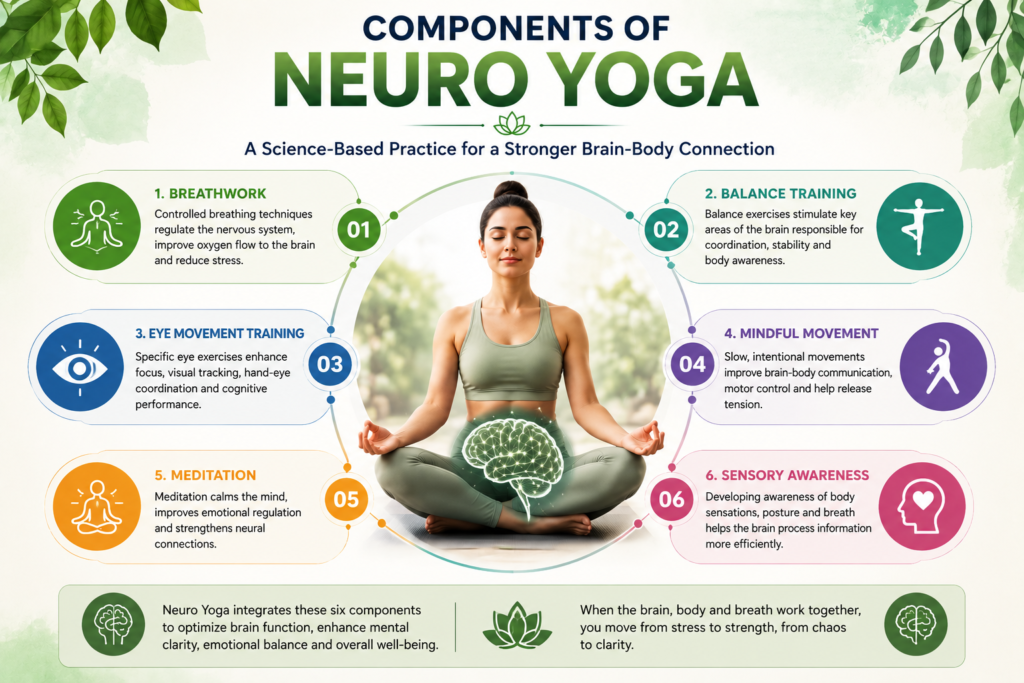
- Breathwork
Controlled breathing helps activate the body’s relaxation response and reduce stress hormones.
- Balance Exercises
Simple balance poses stimulate areas of the brain responsible for coordination and stability.
- Eye Movement Training
Certain eye exercises can improve focus, concentration, and coordination.
- Mindful Movement
Slow, intentional movements strengthen the connection between the brain and muscles.
- Meditation
Meditation helps calm the nervous system and improve emotional regulation.
- Sensory Awareness
Practitioners learn to notice physical sensations, breathing patterns, and posture to increase body awareness.
Benefits of Neuro Yoga
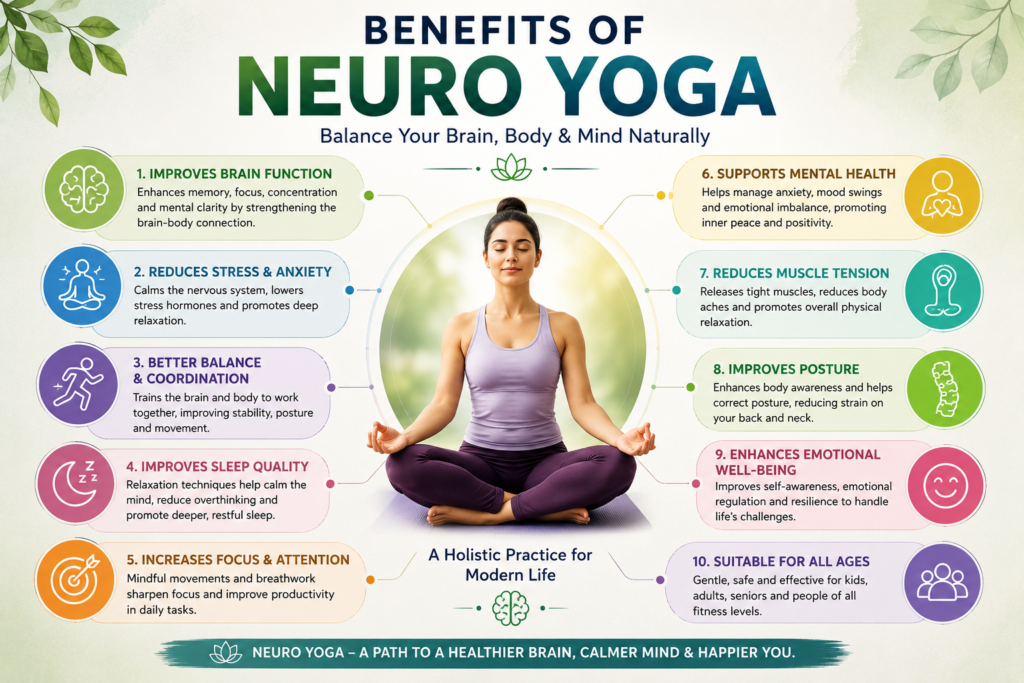
- Reduces Stress – Neuro Yoga encourages relaxation by calming the nervous system, helping reduce everyday stress.
- Improves Brain Function – Regular practice may support memory, attention, and problem-solving by encouraging healthy brain-body communication.
- Better Balance and Coordination – The exercises train the brain and muscles to work together more efficiently.
- Supports Mental Health – Many people report feeling calmer, more emotionally balanced, and better able to cope with anxiety.
- Better Sleep – Relaxation techniques can help improve sleep quality.
- Increases Focus – Mindful breathing and movement may improve concentration during work or study.
- Reduces Muscle Tension – Gentle movements help release tight muscles caused by stress or poor posture.
- Improves Posture – Better body awareness often leads to healthier posture and movement habits.
- Enhances Emotional Well-being – Practicing Neuro Yoga regularly can help you become more aware of your emotions and respond to them more calmly.
- Suitable for All Ages – Because it is gentle and adaptable, Neuro Yoga can be practiced by beginners, older adults, and people returning to exercise.
Who Can Practice Neuro Yoga?
Neuro Yoga is suitable for:
– Office workers experiencing stress
– Students preparing for exams
– Older adults wanting better balance
– People recovering from burnout
– Beginners who find traditional yoga challenging
– Anyone interested in mindfulness and brain health
If you have a neurological condition, chronic pain, or a medical condition, consult a healthcare professional or a qualified instructor before beginning any new exercise program.
Is Neuro Yoga Scientifically Proven?
Many individual elements used in Neuro Yoga—such as mindfulness, controlled breathing, meditation, and balance exercises—have been studied and are associated with benefits for stress management, emotional regulation, and overall well-being. However, “Neuro Yoga” itself is not a single standardized or universally recognized medical therapy, and research specifically on branded Neuro Yoga programs is still developing. More high-quality studies are needed to confirm the effectiveness of specific Neuro Yoga methods.
How to Start Neuro Yoga
You don’t need expensive equipment.
Begin with:
– 5–10 minutes of deep breathing
– Gentle stretching
– Simple balance exercises
– Five minutes of meditation
– Slow, mindful movements
Practicing for 20–30 minutes, three to five times a week, can help you build a consistent routine.
Neuro Yoga is a modern wellness practice that blends traditional yoga with principles from neuroscience to support both physical and mental well-being. By combining mindful movement, breathing techniques, meditation, and nervous system awareness, it encourages a stronger connection between the brain and body. While research on Neuro Yoga as a distinct practice is still emerging, many of its core techniques are supported by scientific evidence for reducing stress and improving overall wellness. Whether you’re looking to improve focus, manage stress, or simply feel more balanced, Neuro Yoga can be a gentle and accessible addition to your routine.