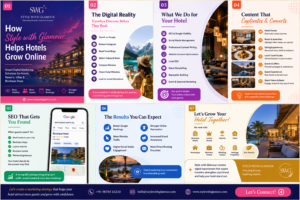
Why Boutique Hotels Need Better Content Marketing

Boutique Hotels Are Unique—So Their Marketing Should Be Too
The hospitality industry is more competitive than ever. Travelers today don’t just book a room—they book an experience. They want personalized stays, beautiful interiors, local culture, delicious food, wellness experiences, and memorable moments.
Boutique hotels already offer these experiences. The challenge is that many fail to showcase them online.
Having a beautiful property is no longer enough. If people cannot discover your hotel through Google or social media, they may never book it.
This is where content marketing becomes one of the most valuable investments for boutique hotels.
What Is Content Marketing?
Content marketing is the process of creating useful and engaging content that attracts potential guests instead of directly selling to them.
This includes:
- Blog articles
- Instagram posts
- Facebook updates
- Reels and short videos
- Professional photography
- Guest stories
- Travel guides
- Local attraction recommendations
- Email newsletters
- SEO-optimized website content
Rather than constantly saying “Book Now,” content marketing builds trust and inspires travelers to choose your hotel.
Why Boutique Hotels Need Better Content Marketing
1. Guests Research Before They Book
Today’s travelers compare several hotels before making a decision.
They usually search for:
- Best boutique hotels in the destination
- Romantic hotels
- Pet-friendly stays
- Family hotels
- Hotels with wellness facilities
- Hotels near tourist attractions
If your hotel does not appear in these searches, you lose potential bookings.
SEO-focused content helps improve your visibility on search engines.
2. Stories Sell Better Than Rooms
People don’t remember room numbers.
They remember experiences.
Instead of simply showing a bedroom, tell stories like:
- A couple celebrating their anniversary
- A chef preparing local cuisine
- Sunrise from the balcony
- Guests enjoying the spa
- Weekend staycation experiences
- Behind-the-scenes moments
Stories create emotional connections that encourage bookings.
3. Social Media Builds Trust
Many travelers visit Instagram before booking.
Inactive social accounts can make a hotel appear outdated.
Regular content such as:
- Beautiful room tours
- Guest reviews
- Staff introductions
- Festival celebrations
- Local sightseeing
- Food videos
- Wellness sessions
helps create an active and trustworthy online presence.
4. Google Loves Fresh Content
Google rewards websites that regularly publish useful information.
Hotels that publish blogs consistently have a better chance of ranking for travel-related searches.
Examples include:
- Best Weekend Getaways Near Gurgaon
- Things to Do Near Our Hotel
- Hidden Attractions Every Tourist Should Visit
- Local Food Guide
- Family Vacation Tips
Every article becomes another opportunity for guests to discover your hotel.
5. Content Helps Build Your Brand
Boutique hotels compete on personality rather than size.
Content allows you to showcase:
- Architecture
- Interior design
- Luxury experience
- Sustainability efforts
- Wellness offerings
- Local culture
- Hospitality philosophy
This creates a memorable identity that guests remember.
6. Better Content Means More Direct Bookings
Many hotels rely heavily on Online Travel Agencies (OTAs), which charge commissions.
Strong content marketing encourages guests to book directly through your website.
Benefits include:
- Higher profits
- Better customer relationships
- More repeat bookings
- Reduced dependence on third-party platforms
7. Video Content Is Driving Hotel Bookings
Short videos have become one of the most powerful marketing tools.
Simple videos can include:
- Room walkthroughs
- Rooftop views
- Spa experiences
- Restaurant highlights
- Guest testimonials
- Local attractions
- Day-in-the-life at the hotel
These videos often receive higher engagement than static images.
8. Guests Trust Real Experiences
Authenticity matters.
Sharing genuine guest experiences, staff stories, and behind-the-scenes moments makes your hotel feel welcoming and trustworthy.
People connect with people—not advertisements.
9. Content Supports Every Marketing Channel
One blog article can be repurposed into:
- Multiple Instagram posts
- Facebook updates
- LinkedIn posts
- Email newsletters
- Pinterest pins
- Short videos
- Google Business Profile updates
This saves time while maintaining a consistent brand presence.
10. Good Content Creates Long-Term Results
Unlike paid advertisements that stop generating traffic once the budget ends, quality content continues attracting visitors over time.
A helpful blog post published today can generate bookings months or even years later through search engines.
This makes content marketing a long-term asset rather than a one-time expense.
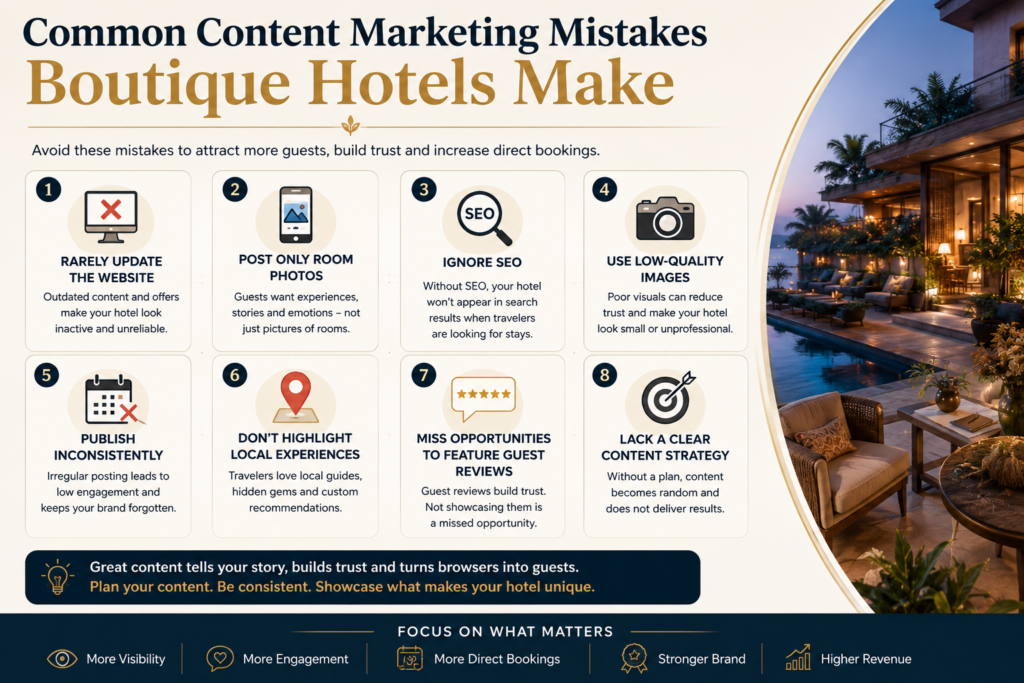
Common Content Marketing Mistakes Boutique Hotels Make
Many boutique hotels struggle because they:
- Rarely update their website.
- Post only room photos without telling stories.
- Ignore SEO.
- Use low-quality images.
- Publish inconsistently on social media.
- Don’t highlight local experiences.
- Miss opportunities to feature guest reviews.
- Lack a clear content strategy.
Avoiding these mistakes can significantly improve online visibility and guest engagement.
A Simple Content Marketing Plan for Boutique Hotels
An effective monthly strategy could include:
- Four SEO-optimized blog articles.
- Twelve social media posts.
- Eight short-form videos or Reels.
- Guest testimonial features.
- Restaurant and food photography.
- Local destination guides.
- Google Business Profile updates.
- Monthly performance reports.
Consistency is far more effective than posting occasionally.
Boutique hotels are built on memorable experiences, thoughtful design, and personalized hospitality. Great content marketing helps communicate these qualities to travelers before they ever step through the door.
By sharing authentic stories, optimizing for search engines, maintaining an engaging social media presence, and consistently publishing valuable content, boutique hotels can attract more direct bookings, strengthen their brand, and stand out in an increasingly competitive market.
In today’s digital-first travel landscape, content marketing isn’t just a promotional tool—it’s a key part of building lasting relationships with guests and driving sustainable business growth.